
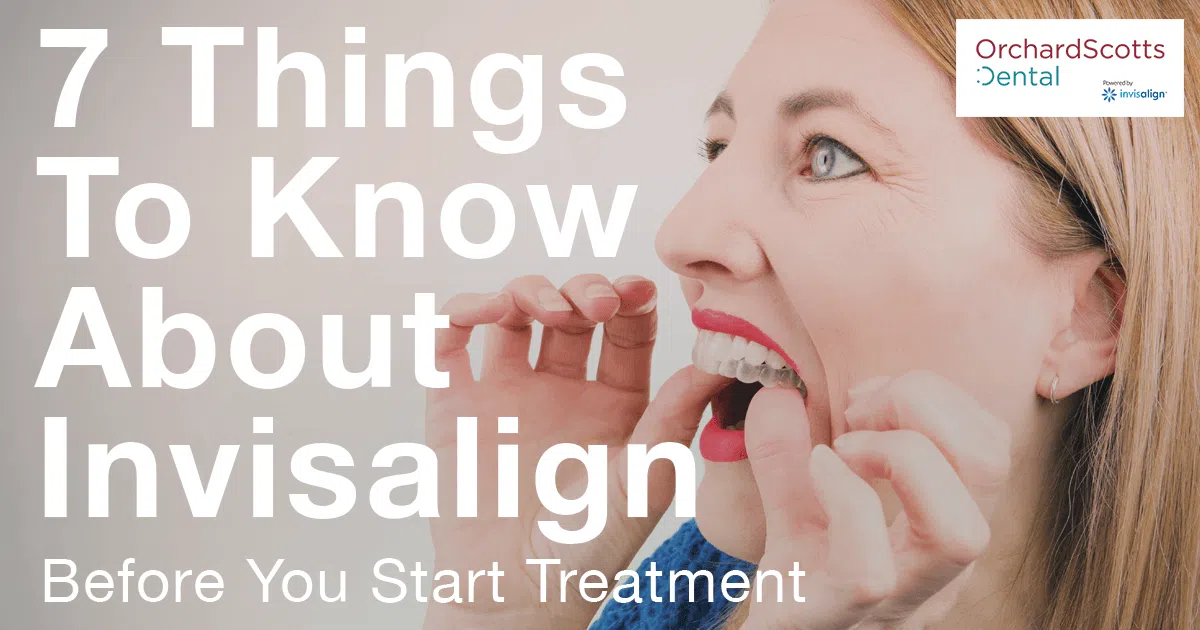
Once your dentist has confirmed that clear aligners suit your case, the next sensible thing is to understand what the treatment asks of you before you begin. Invisalign is straightforward, but it is not effortless — most of its success rests on small daily habits rather than on anything dramatic. Knowing what those habits are in advance is the difference between a treatment that runs to plan and one that drifts. Here is what is genuinely worth knowing.
1. How it feels to wear
The aligners are a transparent, custom-made thermoplastic that sits closely over the teeth. There are no wires or brackets, so they are difficult to notice and gentler on the cheeks than fixed braces tend to be. Occasionally a fresh tray has a slightly rough edge — your dentist can smooth it or you can ease it with a little orthodontic wax. Most people stop being aware of the trays within a day or two.
2. How it works
Each tray is fabricated from a three-dimensional digital scan of your mouth and worn for a set period — often a week or two — before you move to the next in the sequence. The teeth shift a fraction of a millimetre at a time. Depending on the movements your case needs, your dentist may bond small tooth-coloured attachments to certain teeth; these give the trays something to push against and are removed when treatment ends. Most cases run somewhere between twelve and twenty-four months.
3. The commitment that makes it work
This is the part worth dwelling on. The trays need to be worn for at least twenty to twenty-two hours a day — removed only to eat, to drink anything other than water, and to clean your teeth. Aligners do not work on their own; they work in proportion to how consistently you wear them. If you find the idea of that discipline genuinely difficult, it is worth saying so at the consultation, because honesty there saves frustration later.
4. Eating, drinking and keeping things clean
Because the trays come out to eat, there are no dietary restrictions — a genuine convenience over fixed braces. The trade-off is a small ritual: brush, or at least rinse thoroughly, before the trays go back in, so food and acids are not sealed against the teeth for hours. Coffee, tea, wine and lipstick will discolour the trays themselves, so keep those for when the aligners are out. A toothbrush in your bag quickly becomes second nature.
5. Living with them day to day
A faint lisp is common in the first few days as the tongue adjusts; it passes. Beyond that, the trays slot easily into ordinary life. For full-contact sport you will usually want to take them out and use a mouthguard instead. Many people find the small inconvenience of removing the trays to eat curbs idle snacking, which is no bad thing.
Aligners ask less of your daily life than fixed braces do — but what they ask, they ask every day.
6. What progress feels like
Each new tray brings a day or two of pressure as the teeth begin to move — that sensation is the treatment working, and it settles quickly. Teeth may feel slightly loose at points during the process; this too is expected and temporary. The pace of the result is, again, largely in your hands.
7. Holding the result
Teeth have a memory and will drift back if nothing holds them. So treatment does not quite end when the last tray comes out — a retainer keeps the new position, worn more often at first and then usually at night thereafter. It is a small habit, but it is what protects the work you have put in.
If this resonates
If you are weighing up clear aligners, the useful next step is a proper assessment of your bite and your goals, rather than a decision made in the abstract. Arrange a consultation and we will tell you plainly whether aligners are the right tool for the result you are after.