Choosing orthodontic treatment for a teenager is rarely a purely clinical decision. The teeth need what they need, but the right approach also has to fit a young life — school, sport, the self-consciousness of the years when appearance feels enormous. Parents tend to arrive with two questions at once: will it work, and will my teenager actually live with it? Both deserve a straight answer, and the honest one is that the better choice depends on the case and the child, not on the appliance in the abstract.
Clear aligners such as Invisalign are one option worth understanding properly. Here is how we think about them for younger patients.
What clear aligners are
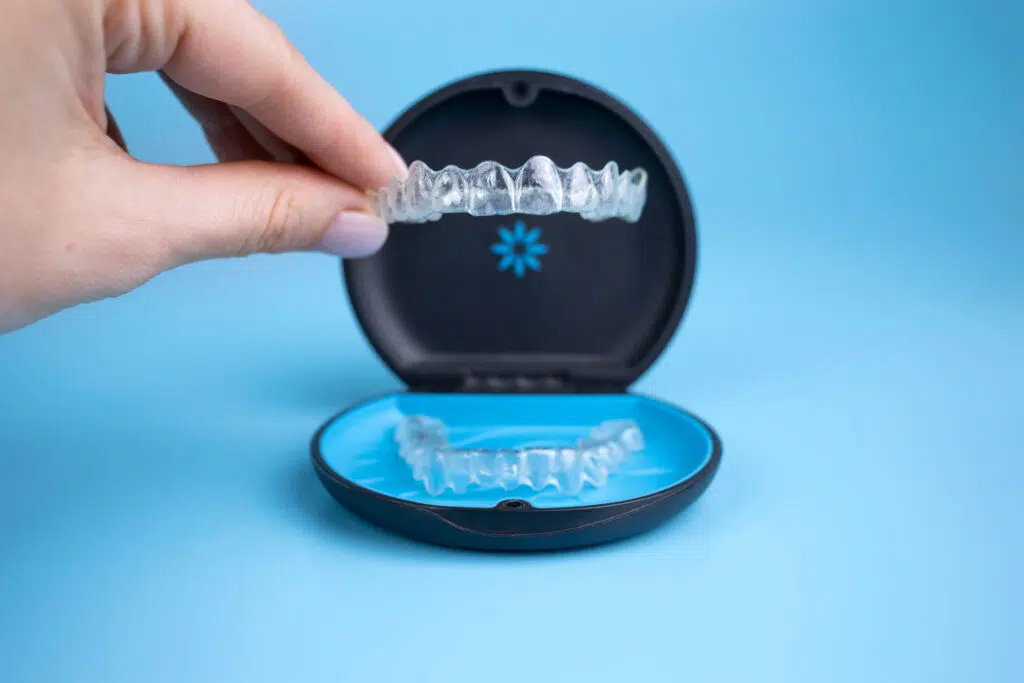
A clear aligner is a transparent, custom-made tray that fits over the teeth and moves them gradually into a better position. The trays are removable, so a teenager takes them out to eat, to clean their teeth, and to play certain sports, then puts them back. For the right candidate, that removability is the heart of the appeal — but it is also where the responsibility sits.
Where they tend to suit a teenager
Self-consciousness. The teenage years are a time when self-image can feel fragile, and a visible appliance is, for some, an unwelcome focus of attention. Clear trays are far less conspicuous, which lets some teens get on with school and friendships without their teeth becoming the subject. For others, this matters very little — and that is worth being honest about, because it shouldn’t drive the whole decision on its own.
Oral hygiene. Because the trays come out, a teenager can brush and floss as they normally would, without working around fixed brackets and wires. For a young person whose cleaning habits are still forming, fewer places for food and plaque to lodge can make it easier to keep teeth and gums healthy through treatment — which in turn lowers the risk of decay and gum problems along the way.
Fewer dietary restrictions. Nothing is fixed to the teeth while they eat, so there is no list of foods to avoid for fear of damaging an appliance. For most teenagers, that is a small but real relief.
Where they ask more of a teenager
The flexibility that makes aligners appealing is also their main demand. They have to be worn for around twenty-two hours a day to keep treatment on track; trays left out too often, or misplaced, slow things down or stall them. For a disciplined, motivated teenager that is no obstacle. For one who is forgetful or easily distracted, fixed appliances — which simply stay on and do their work — can be the more reliable route. There is no shame in either; it is a question of temperament as much as teeth, and an honest conversation about it at the outset saves frustration later.
How treatment is planned
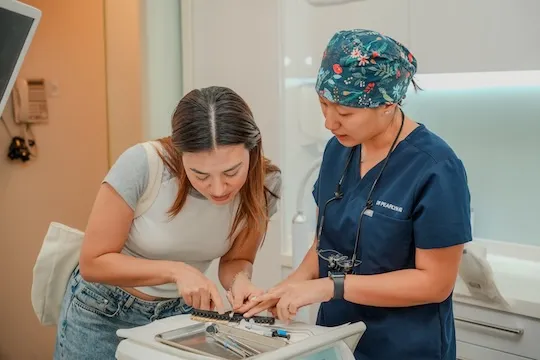
Treatment begins with a consultation and a digital scan — an intra-oral scanner has replaced the older method of biting into plaster, which makes the appointment quicker and more comfortable. From the scan we build a three-dimensional model of your teen’s teeth and design the plan: the precise movements, the number of trays, and a realistic sense of how long it will take. Treatment length varies with the case, but many run somewhere in the range of twelve to eighteen months.
A series of custom trays is then made. Each is worn for about one to two weeks before moving to the next, removed only to eat, drink and clean the teeth. We review progress at intervals and adjust as needed. As with any orthodontic treatment, a retainer afterwards holds the new position while it settles.
If this resonates
If you are considering orthodontic treatment for your teenager, the useful first step is an assessment — of their teeth, their bite, and which approach genuinely fits them. For younger patients whose jaws are still developing, early-intervention orthodontics is sometimes the more appropriate path, and the consultation is where that becomes clear. Arrange a consultation and we will tell you, plainly, what we would and would not recommend.