Clear aligners are usually introduced as the invisible alternative to braces — and they are. But discretion is the least interesting thing about them. The more useful question is not whether anyone will notice you are straightening your teeth, but what straightening them properly does for the years that follow.
Why correcting misalignment matters
Crooked or crowded teeth are often treated as a cosmetic footnote. They tend to be more than that. Tight, overlapping spaces are harder to clean and trap plaque, which raises the risk of decay and gum inflammation. A bite that does not meet evenly places uneven load on the jaw muscles and joints — sometimes contributing to discomfort or tension headaches — and wears the enamel unevenly over time. Alignment also shapes how clearly you speak and how comfortably you chew. And there is the quieter cost: the self-consciousness that makes people hold back a smile in the rooms where it matters most.
Correcting alignment addresses both sides at once — the health of the bite and the confidence of the smile. Clear aligners are one of the more considered ways to do it.
What clear aligners are
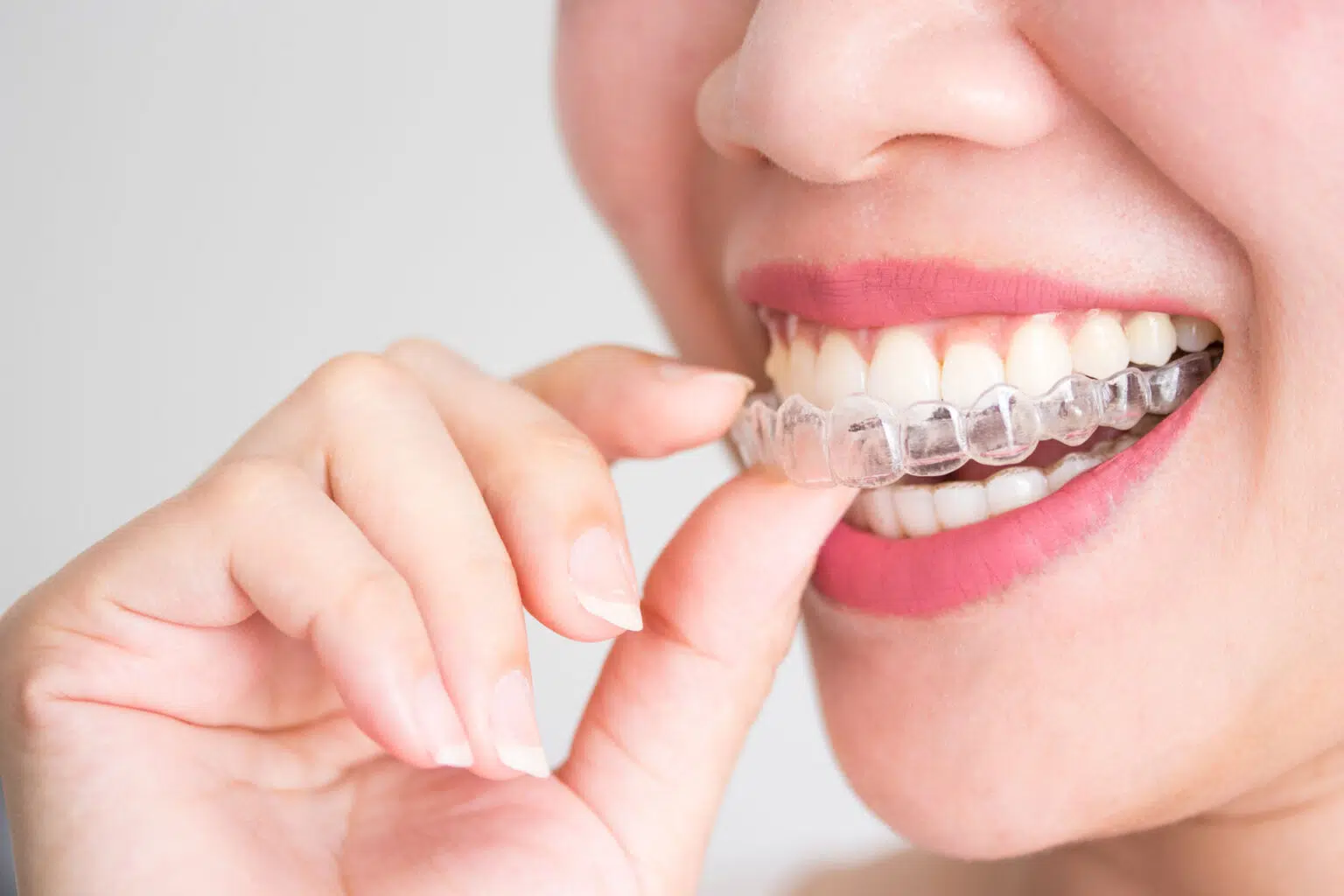
A clear aligner is a transparent, custom-made tray that fits closely over the teeth and moves them gradually — a fraction of a millimetre at a time. Invisalign, Clear Correct, Angel Aligners and Spark are variations on the same principle: a planned sequence of trays, each one easing the teeth a little closer to where they should sit. Because the trays are removable, they ask less of your daily life than fixed appliances do — you take them out to eat, drink anything other than water, and clean your teeth.
How the treatment works
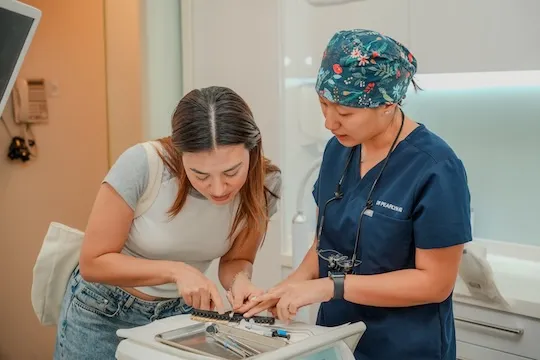
The treatment begins with an assessment rather than an impression kit. Your dentist examines the bite, takes a digital scan using an intra-oral scanner — which has replaced the older method of biting into a tray of plaster — and builds a three-dimensional model of your teeth. From that model comes a treatment plan: the precise sequence of movements, and a realistic sense of how long it will take.
A series of custom trays is then fabricated. You wear each one for twenty to twenty-two hours a day, typically moving to the next in the series every week or two, removing them only to eat and clean your teeth. Progress is reviewed at regular intervals — and for patients whose schedules make frequent visits difficult, we can monitor each stage remotely through the Dental Monitoring app, checking in after every tray rather than waiting for the next appointment.
Where aligners fit — and where they do not
Clear aligners handle a wide range of cases well: crowding, spacing, gaps, and many bite irregularities. They are not the answer to everything. Very complex movements, or cases involving significant skeletal discrepancy, are sometimes better served by other orthodontic approaches — and a thorough assessment is what tells you which camp you fall into. The honest version of this conversation is not “aligners are always the answer,” but “here is what your particular case needs, and here is whether aligners deliver it.”
The way we think about alignment
Straightening teeth is rarely only about straightness. A smile has to work as well as it looks — the bite has to function, the result has to stay healthy, and the finished arrangement has to belong on your face rather than on a template. Those three considerations, biology, function and aesthetics, guide how we plan a case from the first scan.
Our dentists have planned more than 3,500 Invisalign cases, and the experience tends to show up in the details: how far to move a tooth, when to stop, how the finished bite will age. The aim is not a smile that impresses in the first month, but one you will still recognise — and still be comfortable in — years later.
A few questions people ask
How long does treatment take? Most cases run from six months to around two years, depending on how much movement is required and how consistently the trays are worn. Your dentist can give a realistic estimate once the case is planned.
Does it hurt? You will feel pressure for a day or two each time you start a new tray — that is the tooth moving, and it settles quickly. The smooth material is gentler on the cheeks and gums than fixed brackets tend to be.
What does it cost? The figure depends on the complexity of the case and the length of treatment, so it is discussed at your consultation once we understand what your teeth actually need.
Will it affect my speech? Occasionally, for the first few days, as your tongue adjusts to the trays. It passes.
If this resonates
If you are weighing up clear aligners, the useful next step is a proper assessment — your bite, your teeth, your goals — rather than a quote against a generic plan. Our SmileUp programme and Invisalign treatment both begin there. Arrange a consultation and we will tell you, plainly, whether aligners are the right tool for the result you are after.