Can Porcelain Veneers Fill Gaps Between Teeth?
Dr. Leroy Kiang
Porcelain veneers can close small to moderate gaps between teeth — but they are not always the right solution. Learn when veneers work for gaps, when orthodontics is better, and what to consider.
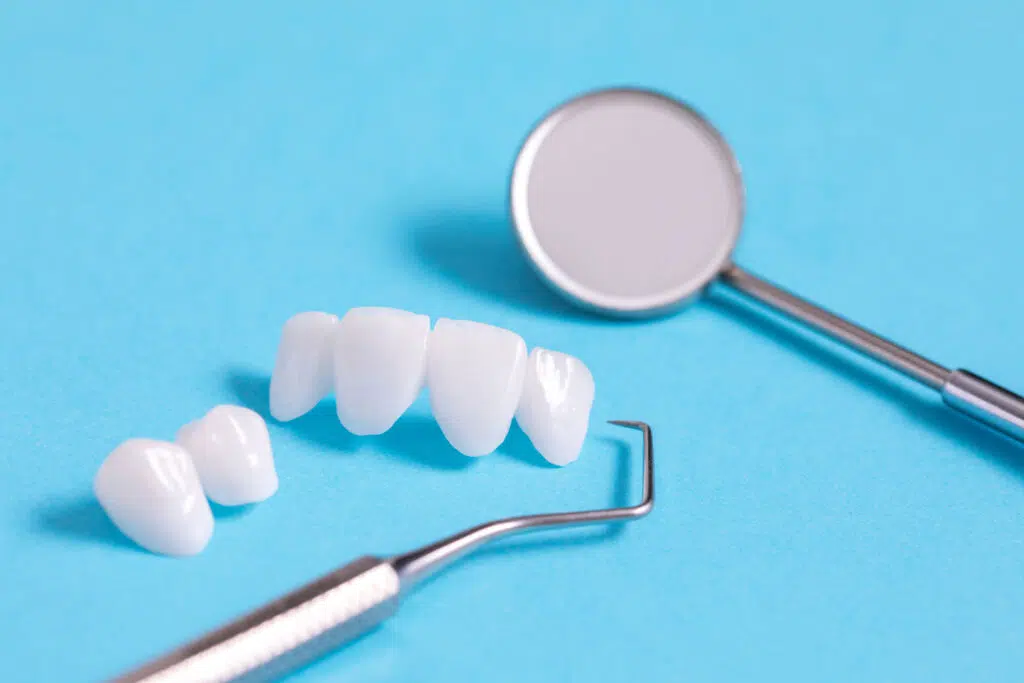
Gaps between teeth — known clinically as diastemas — are one of the most common reasons patients ask about porcelain veneers.
The short answer is yes, veneers can close gaps.
The more useful answer is that whether they should depends on the size of the gap, the position of the surrounding teeth, and what else is happening in your smile.
[[hr]]
When veneers work well for gaps
Porcelain veneers are effective for closing small to moderate gaps — typically up to about 2mm per tooth. The veneer is made slightly wider than the natural tooth, filling the space between adjacent teeth and creating a seamless, even smile line.
This approach works particularly well when the gap is not the only concern. If the teeth on either side of the gap are also discoloured, chipped, or slightly uneven, veneers address all of those issues simultaneously. One procedure resolves multiple problems, which is often more efficient and more aesthetically cohesive than treating each issue separately.
Veneers are also a good option when the gap is caused by teeth that are naturally smaller than expected — a condition called microdontia. Rather than moving normally-positioned teeth closer together, veneers restore the teeth to a more proportionate size, which closes the gap as a natural consequence.
[[hr]]
When veneers are not the right choice
Not every gap should be closed with veneers. If the gap is large — more than 2 to 3mm — widening the veneers enough to close it can make the teeth look disproportionately broad. The result may close the gap but create a different aesthetic problem.
Gaps caused by misalignment are generally better addressed with orthodontic treatment first. If the teeth are in the wrong position, masking the gap with veneers means building on a compromised foundation. The veneers may need to be thicker on one side, thinner on the other, or angled slightly to compensate — all of which affect longevity and appearance.
There are also gaps caused by gum recession or bone loss, particularly in older patients. These require periodontal treatment before any cosmetic work. Placing veneers over unhealthy gum tissue leads to poor margins, bacterial accumulation, and eventual failure.
A thorough assessment determines which category your gap falls into — and therefore which treatment path will produce the most natural, lasting result.
[[hr]]
The process of closing gaps with veneers
When veneers are the right approach, the process follows these steps:
- Assessment and smile design — Your dentist evaluates the gap in the context of your full smile — tooth proportions, gum symmetry, facial midline, and bite. The goal is not just to close the gap but to ensure the result looks balanced and natural. Digital scans and photography inform the treatment plan.
- Mock-up — Before any tooth preparation, a wax-up or digital mock-up shows you how the final result will look. This step is particularly important for gap closure, because the wider veneers need to maintain correct proportions relative to the rest of your teeth.
- Preparation — A thin layer of enamel is removed from the front surface of the teeth receiving veneers. The amount is minimal — typically 0.3 to 0.5mm — but it is necessary to create space for the porcelain and ensure the veneers do not look bulky.
- Fabrication — Impressions are sent to the ceramist, who hand-layers each veneer to the specified dimensions. At practices with an in-house ceramist, the dentist and ceramist work together directly to fine-tune shade, translucency, and the precise width needed to close the gap while maintaining natural proportions.
- Bonding — The veneers are tried in, checked for fit, colour, and gap closure, then permanently bonded. Final adjustments ensure the bite is comfortable and the gum margins are clean.
[[hr]]
How long do veneers last when closing gaps?
Porcelain veneers placed to close gaps have the same longevity as any other porcelain veneer — 15 to 25 years with proper care. The critical factor is whether the gap closure puts unusual stress on the veneers. If the underlying bite is well-balanced and the patient does not grind or clench, there is no additional risk.
Maintenance is straightforward: brush twice daily, floss carefully around the margins, avoid biting hard objects, and attend regular dental check-ups. A night guard is recommended for patients who grind.
[[hr]]
Alternatives to veneers for gap closure
Depending on the situation, other options may be more appropriate:
- Orthodontics (Invisalign or braces) — Best for gaps caused by tooth position. Moves the teeth together rather than masking the gap. Can be combined with veneers afterwards if needed.
- Composite bonding — A quicker, less expensive option for very small gaps. Less durable than porcelain (5–7 years) but requires no enamel removal.
- Dental crowns — Appropriate when the teeth have significant structural damage in addition to the gap.
Your dentist can recommend the most suitable approach based on the size of the gap, the condition of the surrounding teeth, and your goals.
[[hr]]
Porcelain veneers in Singapore
Porcelain veneers are an effective solution for closing gaps between teeth — when the gap is the right size and the surrounding teeth support the approach.
The key is an accurate assessment that considers not just the gap itself, but how it fits within your overall smile.
If you are considering closing a gap, our SmileUp Veneers programme begins with a comprehensive smile analysis that evaluates tooth proportion, gum symmetry, and facial balance — ensuring any gap closure looks natural and lasts.
Aesthetic Dentistry
— Need help?
Whether you're considering porcelain veneers, Invisalign, or dental implants — Orchard Scotts Dental brings 19 years of aesthetic and restorative expertise, 4,200+ smile transformations, and Black Diamond Invisalign status (top 1% in Asia-Pacific).