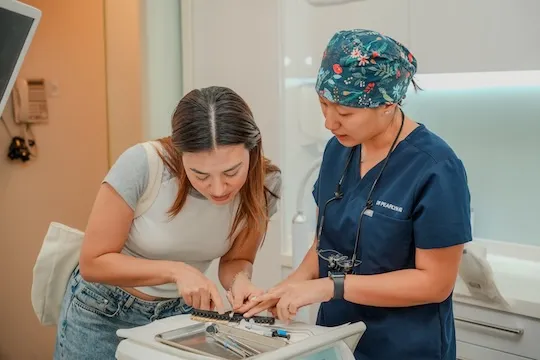
Dental Check-Up
Most dental problems don't hurt until they're advanced.
A thorough check-up catches issues early — when they're simpler, quicker, and less expensive to fix.
- Catch decay, gum disease, and wear before they escalate
- Cleaning that reaches what brushing misses
- A clear picture of your oral health, not just a quick look
.avif)
Why regular check-ups matter
Most dental problems develop silently. Decay can progress beneath the surface. Gum disease can take hold without obvious symptoms. By the time something hurts, it's often more advanced — and more complicated to treat.
Regular check-ups let us catch issues early, when treatment is simpler and less invasive. They also give us a baseline to track changes over time — so we can spot subtle shifts before they become serious.
You may be at higher risk if you:
- Consume sugary or acidic foods and drinks regularly
- Have a history of cavities or fillings
- Notice your gums have receded or bleed when brushing
- Experience dry mouth (often a side effect of medication)
More than a quick look
A check-up shouldn't be a rushed glance at your teeth. We take time to assess your gums, bite, jaw function, and soft tissues — not just whether you have cavities.
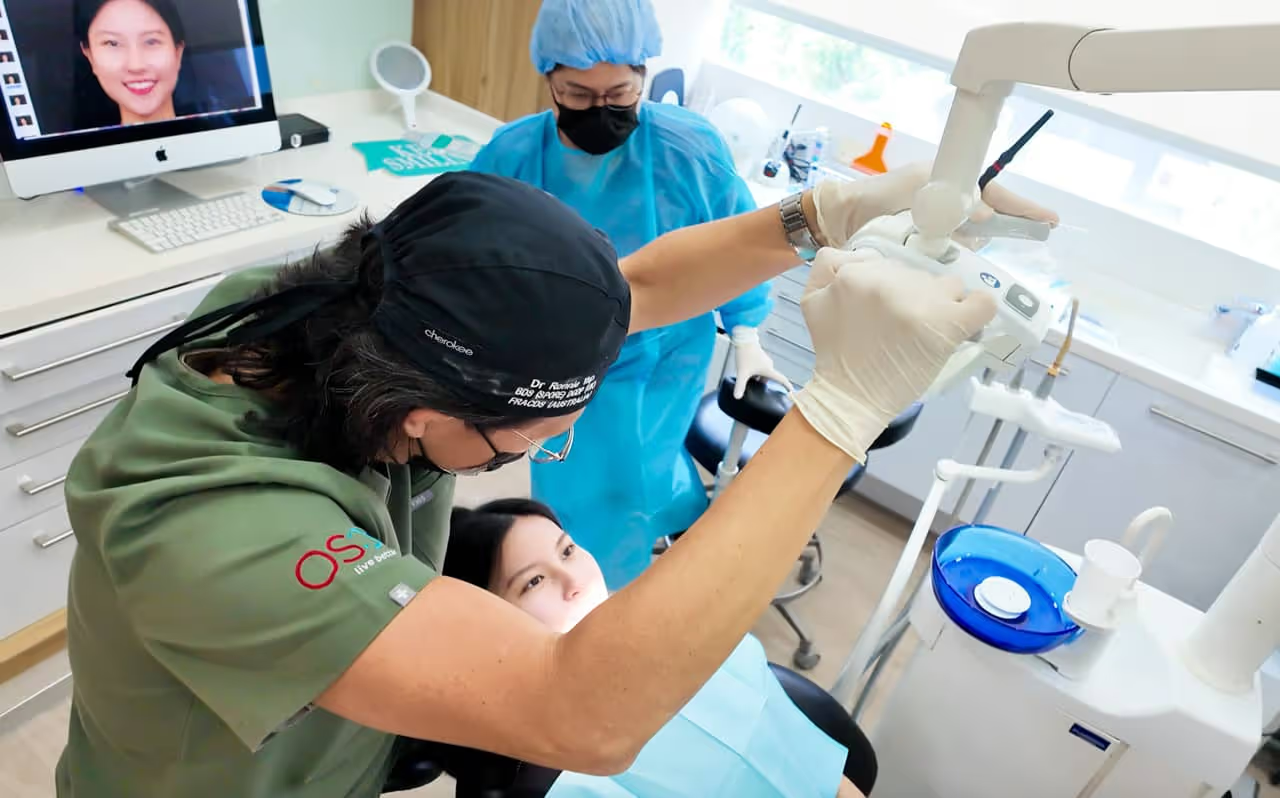
We also use intra-oral scans to track changes over time. This means we can spot subtle shifts in tooth wear, gum recession, or alignment before they become problems — rather than waiting until something hurts.
What happens during a check-up
Comprehensive Examination
We assess your teeth, gums, bite, jaw, and soft tissues — not just a quick cavity check.
Professional Cleaning (Scaling & Polishing)
Removes plaque and tartar buildup that brushing can't reach, leaving your teeth smooth and fresh.
Digital X-rays (If Required)
Used to detect decay, infections, or bone loss that isn't visible during examination. We only take them when clinically necessary.
Intra-Oral Scans
Digital scans that let us track changes in tooth wear, gum recession, and alignment over time — so we can catch problems before they progress.
GC Tooth Mousse
A remineralising treatment that helps restore minerals to weakened enamel. Often recommended for sensitive teeth or early-stage decay.
Frequently asked questions
Every 6 months is the general recommendation, but it depends on your individual risk factors. If you're prone to decay or gum disease, we may suggest more frequent visits. If your oral health is stable, annual check-ups may be sufficient. We'll recommend a schedule based on your situation.
No — check-ups and cleanings are generally very comfortable.
If you experience sensitivity, we’ll take extra care to keep you at ease.
Only when necessary. We use them to check for hidden decay, infections, or bone issues that can’t be seen with the naked eye.
We start with a thorough examination of your teeth, gums, bite, and soft tissues. Then we clean and polish your teeth to remove plaque and tartar buildup. Depending on your situation, we may take X-rays or intra-oral scans to check for issues beneath the surface. The whole appointment typically takes 45–60 minutes.
We'll explain what we've found, show you any X-rays or scans, and discuss your options. There's no pressure to proceed immediately — we want you to understand the situation and make an informed decision.
Typically 45–60 minutes, depending on whether X-rays or additional assessments are needed.
Why Orchard Scotts Dental
A check-up is only as thorough as the time and attention put into it. We take a comprehensive approach — examining teeth, gums, bite, and soft tissues, and using digital scans to track changes over time. It's prevention, done properly.
Nearly 20 years in dental aesthetics
- Smile design expertise applied to every procedure
- Trained eye for proportion and balance
- Commitment to durable, long-lasting results
Patient-first experience
- Consultative, never rushed
- Support for anxious patients
- Rigorous sterilisation protocols

Have your questions answered
Our Concierge Manager will answer your questions — whether it's treatment options, pricing, or booking an appointment.