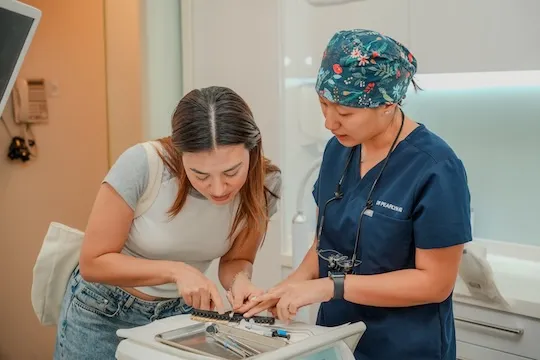
Sleep Apnea & Snoring
If you wake up tired, snore heavily, or struggle to breathe properly during sleep, the cause may be structural — and dentistry can help. We offer non-surgical approaches to open your airway and improve how you sleep.
- Better quality sleep
- Reduced or eliminated snoring
- Non-surgical airway expansion
- Improved daytime energy and focus

Could you have sleep apnea?
Sleep apnea and Upper Airway Resistance Syndrome (UARS) are more common than most people realise — and often go undiagnosed for years.
Both conditions involve partial or complete airway obstruction during sleep. As your jaw and tongue muscles relax, the airway narrows. Breathing becomes harder. Sleep becomes fragmented. And over time, the effects compound — affecting energy, cognition, and long-term health.
Why does this happen?
For many people, the root cause is structural: a narrow jaw, limited tongue space, or chronic nasal obstruction. These often develop in childhood — influenced by factors like mouth breathing, soft diets, and allergies — but the consequences become apparent in adulthood.
Common symptoms include:
- Snoring — often loud or disruptive
- Waking up tired despite "enough" sleep
- Gasping or choking during sleep
- Restless sleep, frequent tossing and turning
- Night-time bathroom visits
- Daytime fatigue, difficulty concentrating
- In children: hyperactivity or ADHD-like behaviour
How dentistry helps with sleep apnea
Dentists play an important role in managing sleep apnea — often working alongside ENT specialists and sleep physicians. While we don't diagnose sleep apnea (that requires a sleep study), we address the structural factors that contribute to airway obstruction.
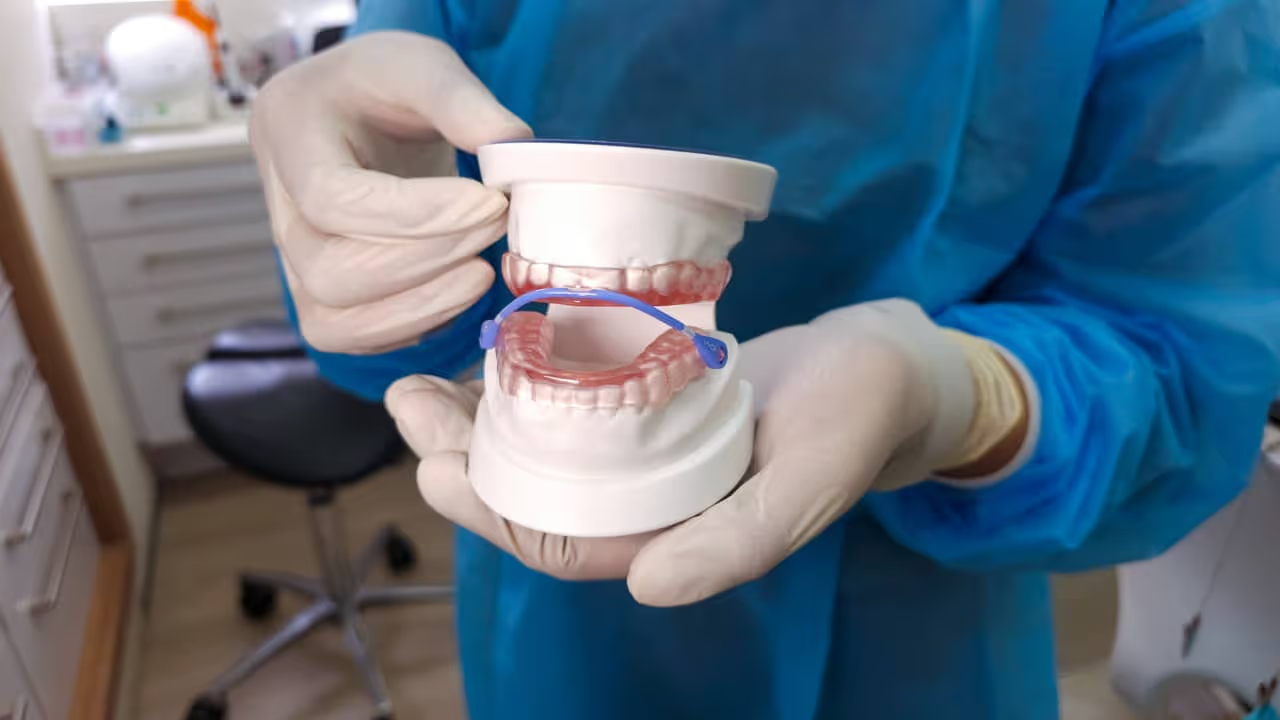
By widening the jaw, creating more tongue space, and improving nasal airflow, we can significantly reduce or eliminate symptoms for many patients — without surgery.
Note: If you haven't had a formal diagnosis, we can guide you through the process and coordinate with sleep specialists as needed.
Treatment options for Sleep Apnea / UARS
The right approach depends on what's causing the obstruction. Treatment is often a combination of the following:
Jaw Expansion (MARPE)
Miniscrew-Assisted Rapid Palatal Expansion widens the upper jaw — and with it, the nasal airway. This creates more space for breathing and can significantly reduce obstruction. Suitable for adolescents and adults.
Orthodontics & Oral Appliances
Repositioning the teeth and jaw can increase tongue space and bring the lower jaw forward, reducing the likelihood of airway collapse during sleep. This may involve braces, aligners, or custom mandibular advancement devices.
Tongue-Tie Release
A restricted tongue (tongue-tie) can contribute to poor tongue posture, mouth breathing, and snoring. Releasing the restriction improves tongue mobility and can help the tongue rest in a healthier position during sleep.
Bite Restoration
For patients with severely worn teeth, restoring vertical dimension creates more space inside the mouth — improving airway capacity. This overlaps with what we call Facelift Dentistry.
Frequently asked questions
It can be. Left untreated, sleep apnea is linked to cardiovascular disease, stroke, hypertension, and chronic fatigue. It also affects concentration, mood, and overall quality of life.
Usually, yes. A formal diagnosis — typically through a polysomnography (sleep study) — helps determine the severity of your condition and the most appropriate treatment. If you haven't been diagnosed yet, we can guide you through the process.
Not necessarily. Many patients improve significantly with non-surgical approaches — jaw expansion, oral appliances, orthodontics, or tongue-tie release. Surgery is typically reserved for severe cases that don't respond to other treatments.
In many cases, yes. Mandibular advancement devices reposition the jaw and tongue, reducing obstruction and snoring. Effectiveness varies depending on the cause and severity.
Yes — and early intervention can be particularly effective. Addressing narrow jaws and airway issues during development can prevent problems from worsening into adulthood.
Dr. Ronnie Yap and Dr. Kenneth Tan lead our Sleep Dentistry practice, working closely with orthodontists, ENT specialists, and sleep physicians to provide comprehensive care.
Why Orchard Scotts Dental
Sleep apnea treatment requires understanding both the airway and the structures that support it. Dr. Ronnie Yap and Dr. Kenneth Tan lead our Sleep Dentistry practice, combining expertise in jaw development, orthodontics, and restorative care to address the root causes — not just the symptoms.
Nearly 20 years in dental aesthetics
- Smile design expertise applied to every procedure
- Trained eye for proportion and balance
- Commitment to durable, long-lasting results
Patient-first experience
- Consultative, never rushed
- Support for anxious patients
- Rigorous sterilisation protocols

Have your questions answered
Our Concierge Manager will answer your questions — whether it's treatment options, pricing, or booking an appointment.