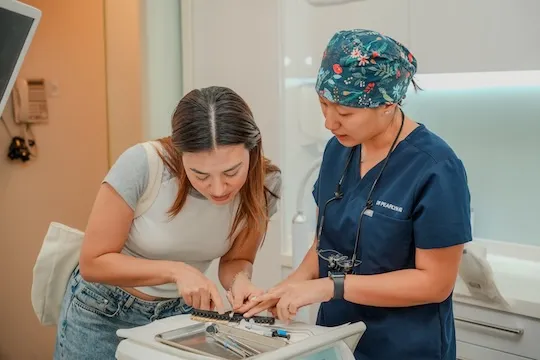
Tooth Extractions
If you're about to lose a tooth, the extraction itself is just the first step.
What's more important is what comes next — and whether you can preserve bone for an implant. For wisdom teeth, it's simpler: remove them before they cause problems.
- Relief from pain and infection
- Wisdom tooth removal before problems develop
- Sedation options for nervous patients
- Immediate implantation when conditions allow

When is extraction the right choice?
We always try to save a tooth if we can, but sometimes extraction is the better option. This might be the case when:
- Decay or damage is too extensive for a filling, crown, or root canal to restore
- Infection has spread to the bone and can't be controlled
- A cracked tooth has split below the gum line
If you're losing a tooth you'll need to replace, the timing and technique of extraction matter. Removing a tooth carelessly can damage bone and gum tissue you'll need for an implant later. We plan extractions with replacement in mind — not as an afterthought.
Wisdom teeth are a special case
Most people don't have room for their wisdom teeth. When they come through partially or at an angle (impacted), they can cause pain, swelling, and recurring infections — or push against neighbouring teeth. Removing them early, before problems develop, is often easier than waiting until they become symptomatic.
Comfortable, not just tolerable
Extractions have a reputation — and we know many patients feel anxious. We use techniques designed to make the experience genuinely comfortable, not just bearable:
- Slow-release anaesthesia — Delivered gradually so you don't feel the injection
- Laser-assisted extraction — Reduces trauma to surrounding tissue and speeds healing
- Sedation options — From oral sedation to IV sedation for anxious patients or complex cases
.avif)
If you're nervous about the procedure, let us know. We'll tailor the approach to your comfort level.
Immediate implantation
If you're about to lose a tooth — through fracture, infection, or structural failure — there's sometimes an opportunity to place an implant the same day as extraction. This preserves bone and gum tissue that would otherwise recede.
Not every case qualifies. We assess bone quality, infection status, and whether the aesthetic outcome will be better now or later. When conditions are right, it's often the better path.
You may be a candidate if:
- The tooth is failing but surrounding bone is still healthy
- There's no active infection spreading beyond the root
- You're planning to replace the tooth with an implant anyway
If immediate placement isn't suitable, we'll discuss the timeline for delayed implantation — typically 3–6 months after extraction, once the bone has healed.
.avif)
Treatment options for Tooth Extractions
Simple Extraction
For teeth fully visible above the gum line. The tooth is loosened and removed in a single appointment — usually in under 30 minutes.
Surgical Extractions
For teeth that have broken below the gum line or haven't fully emerged. A small incision is made to access and remove the tooth safely. Sutures may be needed.
Wisdom Teeth Removal
Wisdom teeth often emerge at an angle or remain partially trapped (impacted). Removal prevents pain, recurring infection, and damage to neighbouring teeth. We can remove one or all four in a single appointment, with sedation if preferred.
Immediate implantation
If you're losing a tooth that isn't a wisdom tooth, replacement matters — gaps cause neighbouring teeth to shift and can affect your bite long-term. In some cases, we can place an implant the same day as extraction.
Frequently asked questions
No — with modern anaesthesia and gentle techniques, most patients report little to no pain during the procedure.
Most patients return to normal activities within 1–2 days. Healing continues over 1–2 weeks.
Yes, if it’s not a wisdom tooth. Replacing the tooth with an implant, bridge, or denture prevents shifting of other teeth and preserves your bite.
Sometimes, yes. If the bone around the tooth is healthy and there's no spreading infection, we can often place an implant immediately after extraction. This preserves bone and tissue that would otherwise shrink while waiting. We'll assess your case and let you know whether same-day placement or a delayed approach makes more sense.
You're not alone — many patients feel anxious about extractions. We offer sedation options ranging from oral sedation (a tablet to help you relax) to IV sedation (you'll be drowsy and won't remember the procedure). Let us know how you're feeling and we'll tailor the approach to your comfort level.
It depends on your preference and the complexity of each tooth. Many patients choose to remove all four in a single appointment to avoid multiple recoveries. We can do this under sedation so you're comfortable throughout. If you'd prefer to stage the extractions, that's also an option.
Stick to soft foods for the first few days — soups, yoghurt, smoothies, scrambled eggs. Avoid hot foods immediately after, and don't use a straw (the suction can dislodge the healing clot). We'll give you detailed aftercare instructions.
Why Orchard Scotts Dental
Extractions don't have to be stressful — and they don't have to mean months of waiting. We offer sedation for anxious patients, laser-assisted techniques that reduce trauma, and same-day implant placement when conditions allow. If you're losing a tooth, we'll help you plan what comes next.
Nearly 20 years in dental aesthetics
- Smile design expertise applied to every procedure
- Trained eye for proportion and balance
- Commitment to durable, long-lasting results
Patient-first experience
- Consultative, never rushed
- Support for anxious patients
- Rigorous sterilisation protocols

Have your questions answered
Our Concierge Manager will answer your questions — whether it's treatment options, pricing, or booking an appointment.