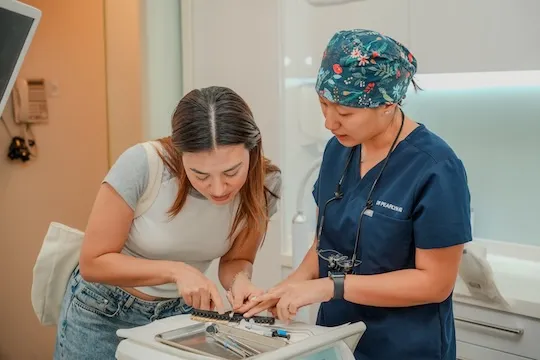
Early Teeth Alignment & Jaw Development
Guiding teeth and jaw development while growth is still happening — so bigger problems don't develop later.
- Fewer extractions later
- Healthier jaw growth
- Balanced bite development
- Better facial proportions

Why early intervention matters
Children's jaws are still growing — which means we can guide development rather than correct problems after they've set in.
Crowding, overbites, underbites, narrow arches — these don't fix themselves. Left alone, they often worsen. What could have been a simple intervention at age 8 becomes extractions and lengthy braces at 14.
Beyond straighter teeth, early treatment affects how your child breathes, chews, and speaks. These aren't cosmetic concerns — they're functional ones.
We guide growth — not just straighten teeth
Before recommending any appliance, we assess why the issue is developing. Thumb-sucking? Mouth breathing? A jaw that's growing unevenly? The cause shapes the solution.
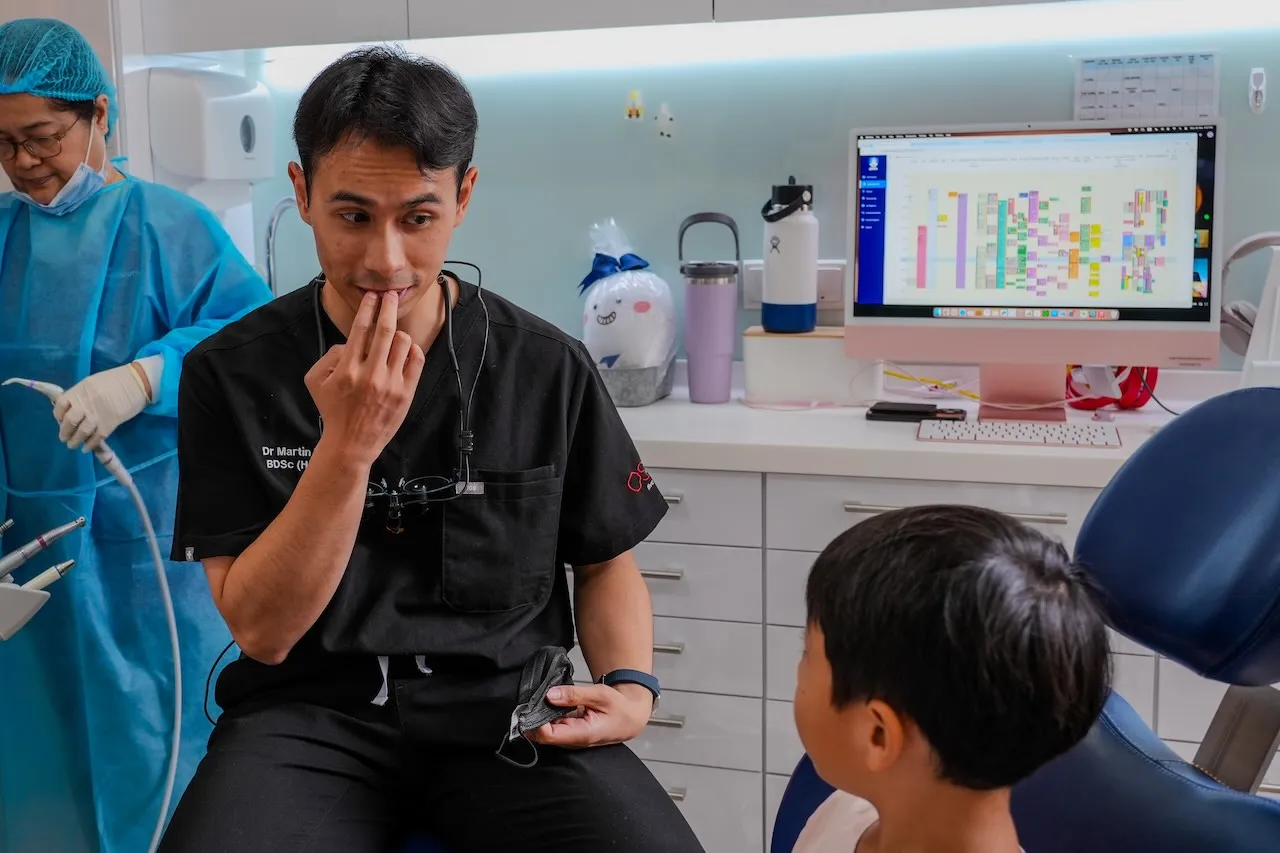
That means 3D imaging, bite analysis, and understanding your child's habits — not just looking at crooked teeth and reaching for braces. If the underlying cause isn't addressed, the problem often returns.
Treatment options for Early Teeth Alignment & Jaw Development
Palatal Expander (Growth Guidance Appliances)
Widen a narrow upper jaw while it's still growing — creating space for permanent teeth and improving how the upper and lower jaws fit together.
Invisalign First & Invisalign Palatal Expander
Clear aligner options designed specifically for growing children.
Invisalign First addresses crowding and spacing in mixed dentition (ages 6–10). The Invisalign Palatal Expander widens narrow arches without metal hardware. For children with overbites, Invisalign Mandibular Advancement guides the lower jaw forward as they grow.
Functional Appliances
Guide how the upper and lower jaws develop relative to each other — particularly useful for overbites and underbites while growth is still happening.
Space Maintainers
When baby teeth fall out early, neighbouring teeth drift into the gap. Space maintainers hold the position until the permanent tooth is ready to come through.
Myobrace (Habit Correction Appliances)
Address the habits — thumb-sucking, mouth breathing, tongue thrusting — that cause alignment problems in the first place. Treating symptoms without addressing habits often means the problem returns.
Early Orthodontic Aligners/Braces
Clear aligners or braces for children whose permanent teeth have started coming through — guiding them into position before crowding becomes severe.
Frequently asked questions
We recommend an initial assessment around age 7 — when the first adult molars appear and bite patterns become visible. Some issues are easier to address while the jaw is still growing. That said, it's never too late to assess — we see children of all ages.
Early treatment guides jaw growth and creates space for permanent teeth, preventing bigger issues later.
Delaying treatment may lead to more severe crowding, jaw issues, or the need for extractions.
Possibly, but treatment is often shorter and less complex after early intervention.
Most children adjust quickly, with only minor discomfort when appliances are first fitted.
Dr. Jerry Lim, Dr. Ronnie Yap, Dr. Kenneth Goh, and Dr. Leroy Kiang all treat children's orthodontic needs. They bring the same diagnostic approach to early intervention as they do to adult cases — identifying not just what needs correcting, but why it developed in the first place.
Why Orchard Scotts Dental
Children's orthodontics done well means fewer extractions, shorter treatment, and better outcomes later. We assess why problems develop — not just what they look like — and address causes while the jaw is still growing.
Nearly 20 years in dental aesthetics
- Smile design expertise applied to every procedure
- Trained eye for proportion and balance
- Commitment to durable, long-lasting results
Patient-first experience
- Consultative, never rushed
- Support for anxious patients
- Rigorous sterilisation protocols

Have your questions answered
Our Concierge Manager will answer your questions — whether it's treatment options, pricing, or booking an appointment.