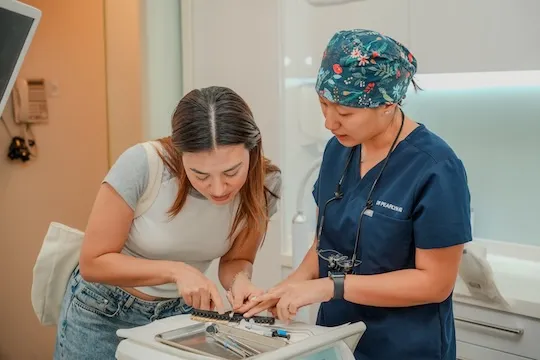
Consult & Treatment Planning
Assessment & X-ray
Confirm the extent of decay or damage; discuss your goals.
Shade selection & plan
Match composite shade to neighbouring teeth.
A cavity caught early is a simple fix. A chipped tooth doesn't have to stay that way.
Modern fillings and bonding restore both function and appearance — without the metallic look of older materials.
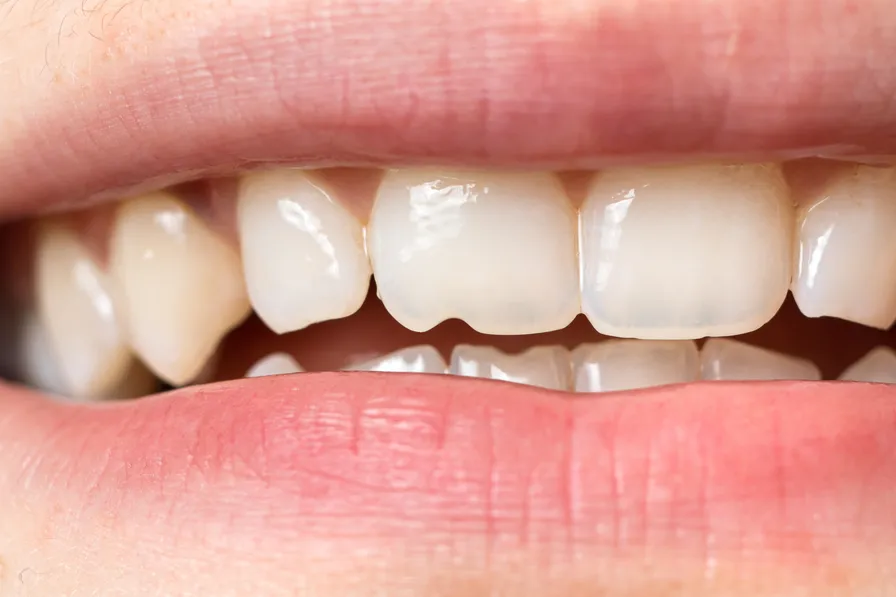
Left alone, a small cavity becomes a bigger problem. What starts as minor decay can progress to sensitivity, pain, and eventually the need for more invasive treatment like root canal therapy or extraction.
Modern tooth-coloured fillings let us treat decay while it's still straightforward — restoring both strength and appearance in a single appointment.
Traditional silver amalgam fillings are durable, but they don't bond to the tooth — they're held in place mechanically, which sometimes requires removing more tooth structure to create retention.
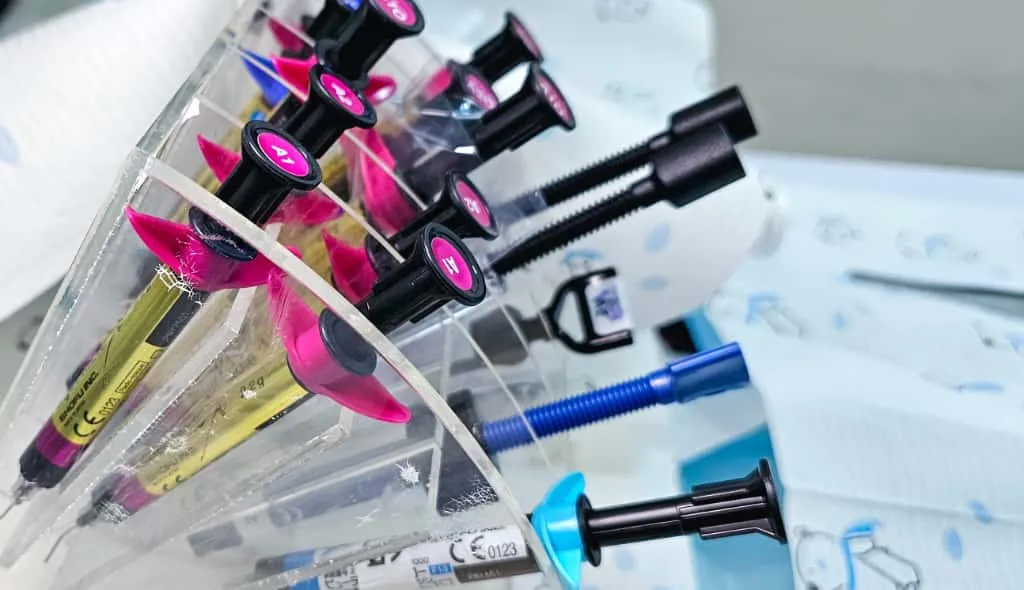
Composite resin bonds directly to enamel and dentine. This means we can often preserve more of your natural tooth whilst still achieving a strong, lasting repair.
The material is also matched to your tooth shade, so the result looks natural — particularly important for visible teeth.
The standard approach for treating cavities. We remove the decay, then restore the tooth with tooth-coloured composite that bonds directly to your enamel.
Uses the same composite material to reshape teeth, repair chips, or close small gaps — without extensive preparation. Often completed in a single visit.
Replacing old metal fillings with composite — either for aesthetic reasons or because the old filling is failing. We assess each case to determine if replacement is warranted.
For larger cavities where a standard filling wouldn't provide enough support. These are custom-made restorations (often ceramic) that fit precisely into or over the damaged area — stronger than fillings but less invasive than crowns.
Note: For your broad understanding only — steps differ between patients. After consultation, your dentist will provide a detailed, customised treatment plan.
Confirm the extent of decay or damage; discuss your goals.
Match composite shade to neighbouring teeth.
Keeps procedure comfortable.
Remove decay, clean and shape the cavity.
Apply adhesive, layer composite resin, cure with light between layers.
Shape to natural contours and polish for seamless finish.
Ensure comfortable chewing; make corrections as necessary.
Most fillings are completed in 30–60 minutes in a single appointment.
Typically 5–10 years or longer, depending on the size of the filling, where it is in your mouth, and your bite and oral hygiene habits. Smaller fillings in low-stress areas tend to last longest.
Tooth-coloured fillings are strong enough for most everyday needs, while also giving a much better, natural look. It is durable and strong, especially when used for small to medium restorations.
For larger cavities, crowns may be recommended for additional support.
Bonding material can pick up stains over time, but good oral hygiene and regular professional cleaning will help maintain its colour.
Yes.
Cosmetic bonding is minimally invasive and can be modified or replaced if needed.
The bonding material (resin) is applied on top of the enamel and can be polished off or replaced if needed.
If any enamel was lightly roughened/etched to help the resin stick, that change is not reversible, but it’s minimal and usually doesn’t weaken the tooth.
No. We use local anaesthesia to numb the area, so you shouldn't feel anything during treatment. Some patients with very small cavities don't even need anaesthesia. You may have mild sensitivity for a day or two afterwards, but this typically settles quickly.
If the cavity is large or the tooth has lost significant structure, a filling may not provide enough support. In those cases, we'd recommend an inlay, onlay, or crown to protect the tooth long-term. We'll discuss your options during the consultation.
A filling is a small procedure — but the difference between one that lasts and one that fails often comes down to technique: proper isolation, careful layering, and attention to how your bite comes together. We take the time to get it right.

Our Concierge Manager will answer your questions — whether it's treatment options, pricing, or booking an appointment.