How Long Do Dental Veneers Last?
Dr. Kenneth Goh
Porcelain veneers can last 10 to 15 years or longer with proper care. Composite veneers typically last 5 to 7 years. Here is what affects their longevity — and how to get the most from your investment.
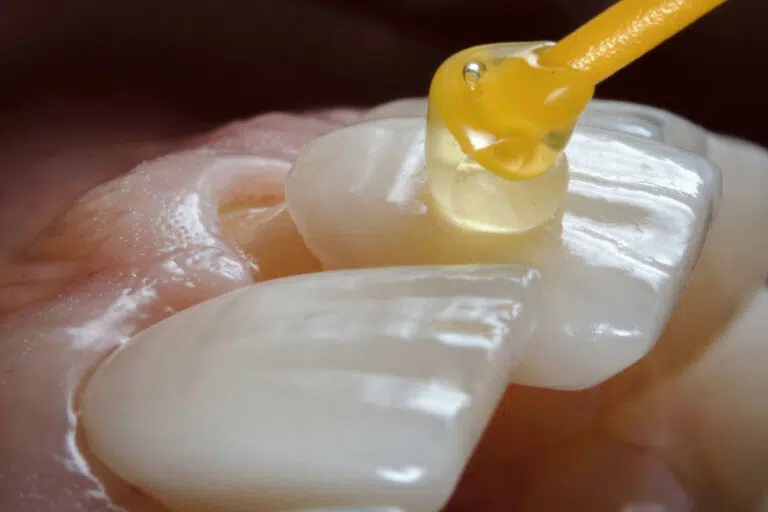
Dental veneers are one of the most effective ways to improve the appearance of your smile — but they are also an investment. Understanding how long they last, and what affects their longevity, helps you make a more informed decision.
There are two main types of dental veneers: porcelain and composite resin.
You may also see the term "ceramic veneers" — these are porcelain veneers, as porcelain belongs to the ceramic family of materials. The distinction that matters is between porcelain and composite resin, because the material you choose determines how long your veneers will last, how they look over time, and how they are maintained.
[[hr]]
How long do porcelain veneers last?
Porcelain veneers routinely last 15 to 25 years when properly placed and maintained. The material resists staining, holds its translucency, and bonds securely to prepared enamel. Longevity depends on three things: the precision of the initial preparation, the quality of the ceramic work, and the patient's maintenance habits.
At Orchard Scotts Dental, our documented cases show porcelain veneers performing well beyond the 15-year mark — a reflection of the time invested in diagnosis, preparation, and in-house fabrication by our dedicated ceramist.
[[hr]]
How long do composite resin veneers last?
Composite resin veneers typically last 5 to 7 years. The material is more porous than porcelain, making it susceptible to staining from coffee, tea, and red wine. Composite also wears more quickly under normal biting forces.
That said, composite veneers have their place. They require less enamel removal, cost less, and can be repaired chairside. For patients who want a reversible option or need a shorter-term solution, composite is a reasonable choice.
[[hr]]
What affects how long veneers last?
Several factors influence the lifespan of any veneer:
- Material quality — Higher-grade porcelain, hand-layered by a skilled ceramist, outperforms mass-produced alternatives.
- Preparation accuracy — Removing the right amount of enamel — not too much, not too little — ensures a stable bond and natural contour.
- Bite alignment — Unaddressed bite issues place uneven stress on veneers, increasing fracture risk. A thorough assessment before placement catches these problems early.
- Oral habits — Grinding, clenching, chewing ice, or using teeth as tools all shorten veneer life. A night guard is often recommended for patients who clench or grind.
- Maintenance — Regular dental visits, proper brushing technique, and avoiding abrasive whitening toothpastes all contribute to longevity.
[[hr]]
What to expect when getting porcelain veneers
The process matters as much as the material. Rushed preparation or poor communication between dentist and ceramist leads to veneers that look artificial or fail prematurely. Here is what a thorough process looks like:
- Comprehensive assessment — Beyond a standard consultation, this includes a detailed smile analysis covering facial proportions, gum symmetry, tooth alignment, and how your smile moves when you speak and laugh. Photography, digital scans, and bite analysis inform the treatment plan.
- Smile design — Before any preparation begins, a wax-up or digital mock-up shows you the projected result. This is where adjustments happen — shape, length, proportion — so there are no surprises at bonding.
- Preparation — A thin layer of enamel is removed to create space for the veneer. The amount varies by tooth and by case; conservative preparation preserves as much natural structure as possible.
- Fabrication — Impressions go to the ceramist, who hand-layers each veneer to match the agreed design. At practices with an in-house ceramist, the dentist and ceramist collaborate directly — adjusting shade, translucency, and surface texture without the delays and miscommunication of an external lab.
- Bonding — The veneers are tried in, checked for fit and colour match, and permanently bonded. Final adjustments to the bite ensure comfortable, even contact.
- Follow-up — A review appointment confirms the bond is secure, the bite is balanced, and the gums are responding well.
[[hr]]
How to make your veneers last
Good habits protect your investment:
- Brush twice daily with a non-abrasive fluoride toothpaste
- Floss daily — veneers are bonded to natural teeth, which still need gum care
- Wear a night guard if you grind or clench
- Avoid biting directly into very hard foods (ice, bone, hard sweets)
- Keep up with six-monthly dental check-ups so minor issues are caught early
- Limit staining agents if you have composite veneers — porcelain is far more resistant, but composites absorb colour over time
[[hr]]
Getting dental veneers in Singapore
Porcelain veneers are a long-term investment — 15 to 25 years when the work is done well and maintained properly. Composite veneers suit shorter-term needs at a lower cost. In both cases, the quality of the clinical process and the patient's ongoing care determine how long the result lasts.
If you are considering veneers, the place to start is a detailed assessment — not a quick quote. Learn more about our SmileUp Veneers programme, which has refined this process over 4,200 cases and 19 years of aesthetic dentistry.
Aesthetic Dentistry
— Need help?
Whether you're considering porcelain veneers, Invisalign, or dental implants — Orchard Scotts Dental brings 19 years of aesthetic and restorative expertise, 4,200+ smile transformations, and Black Diamond Invisalign status (top 1% in Asia-Pacific).
At Orchard Scotts Dental, we have a team of dentists with years of experience in providing veneer treatment to patients.
Before every treatment, we do a thorough analysis of your dental health to safeguard your long-term well-being.